Buy ezxf.com ?
We are moving the project
ezxf.com .
Are you interested in purchasing the domain
ezxf.com ?
domain@kv-gmbh.de · 0541-91531010
Buy ezxf.com ?
Are humans apes?
Yes, humans are classified as apes. Apes are a group of primates that includes humans, chimpanzees, gorillas, orangutans, and bonobos. Humans share a common ancestor with these other apes and are considered part of the same biological family, Hominidae. Therefore, humans are considered to be a type of ape. **
Why are there so many intelligent apes in Planet of the Apes?
In the Planet of the Apes franchise, the intelligent apes are a result of a fictional scenario where apes have evolved to possess human-like intelligence and abilities. This is often attributed to a virus that was created in a lab and accidentally spread to the ape population, leading to their rapid evolution. The story explores the consequences of this evolution and the power dynamics between humans and apes. The presence of intelligent apes serves as a central theme in the franchise, allowing for a thought-provoking exploration of societal and ethical issues. **


Similar search terms for Apes
Top-Angebote
Products related to Apes:
-
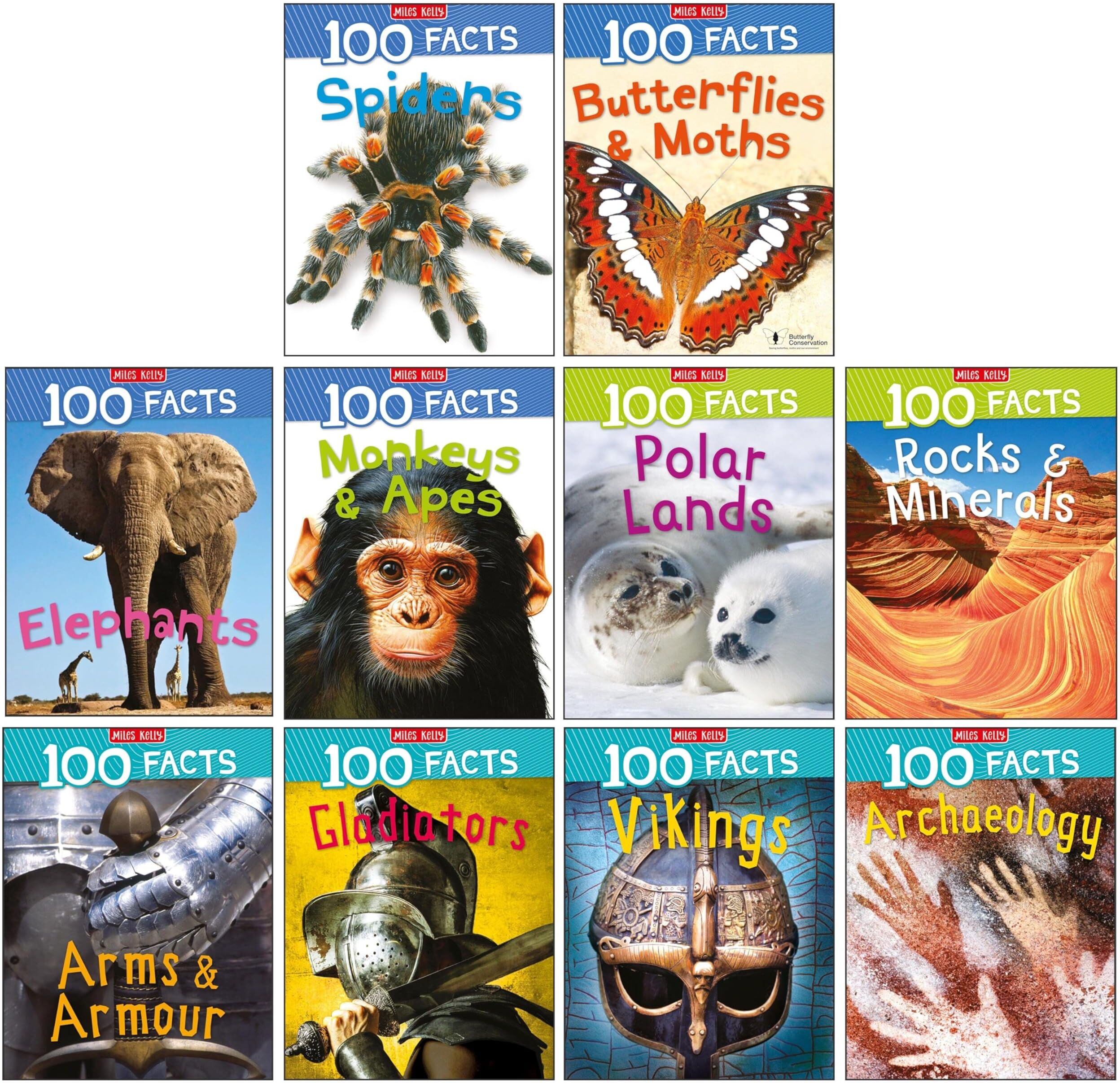
Miles Kelly Publishing 100 Facts Series 10 Books Collection Set (100 Facts: Spiders, Butterflies and Moths, Elephants, Monkeys and Apes, Polar Lands, Rocks and Minerals, ArmTitles in this Set: 1. 100 Facts Spiders 2. 100 Facts Butterflies and Moths 3. 100 Facts Elephants 4. 100 Facts Monkeys and Apes 5. 100 Facts Polar Lands 6. 100 Facts Rocks and Minerals 7. 100 Facts Arms & Armour 8. 100 Facts Gladiators 9. 100 Facts Vikings 10. 100 Facts Archaeology Description: 100 Facts Spiders 100 Facts Spiders is bursting with fascinating images, fun activities and amazing facts all about these eight-legged creatures. Kids learn more easily with bitesized information Photographs and artworks aid children who learn through visual prompts Activities allow children to put what they have learned into practice 100 Facts Spiders includes key topics about many species of arachnids with exciting numbered facts. Each fact is accompanied by beautiful illustrations and photographs, which add visual meaning to the information for kids. This is a fantastic spider book for kids aged 7+ who are intrigued by these creepy crawlies. 100 Facts Butterflies and Moths 100 Facts Butterflies and Moths is a top butterfly book packed with 100 fantastic facts, detailed images and super-fun activities. Close-up photos bring butterflies, moths and caterpillars to life on the page Supports education at key stage 1 and key stage 2 Fun activities and facts throughout to help the information seem less daunting 100 Facts Butterflies and Moths covers key topics in interesting numbered facts. Amazing information alongside clear illustrations and photographs put mind-blowing facts into context for young learners. This butterfly book for children is perfect for school projects, homework and simply discovering more about what's in the garden. 100 Facts Elephants 100 Facts Elephants is bursting with detailed images, activities and exactly 100 amazing facts for children to learn about the biggest land-living creatures in the world. Simple activities help children put difficult ideas into context Looks at different elephant species and where they live Cartoons and fun facts add humour to learning 100 Facts Elephants contains key topics about the extraordinary lives of elephants in straightforward numbered facts. Each fact is accompanied by beautiful illustrations and photographs, which add visual meaning to the information for kids. This elephant book for kids aged 7+ years is ideal for school projects and homework. 100 Facts Monkeys and Apes 100 Facts Monkeys and Apes is bursting with fantastic images, fun activities and awesome primate facts for kids. Kids learn more easily with bitesized information Photographs and artworks aid children who learn through visual prompts Activities allow children to put what they have learned into practice 100 Facts Monkeys and Apes covers key topics about our closest animal relatives in interesting numbered facts. Information is accompanied by amazing illustrations and photographs that put unbelievable facts into context for children. Our monkey books for kids are great for school projects and homework. 100 Facts Polar Lands 100...12,95 £*Shipping: 2,99 £Secure redirect to the provider
-
Klutz: LEGO GadgetsThis activity kit will have you building 11 machines including a gravity powered car and a wacky boxing robot. The fun doesn't stop once you've completed all of the projects in the book - open-ended prompts will inspire you to continue experimenting...24,99 $*Shipping: 0,00 $Secure redirect to the provider
-
Uplift Essentials Precision Screwdriver Set Professional Repair Kit For Electronics, Laptops, Phones, And Small Devices 152 In 1 (blue)This precision screwdriver kit is designed for repairing electronics and handling detailed technical tasks. Whether you are working on laptops, phones, gaming consoles, drones, watches, eyeglasses, or home gadgets, this allinone set provides every...125,97 $*Shipping: 0,00 $Secure redirect to the provider



-
Which great apes are there?
There are four species of great apes: gorillas, orangutans, chimpanzees, and bonobos. **
-
Did we descend from apes?
No, humans did not directly descend from apes. Both humans and apes share a common ancestor that lived millions of years ago. Through the process of evolution, humans and apes have evolved separately, each developing unique traits and characteristics. While humans and apes are closely related, they are distinct species with their own evolutionary paths. **
-
Do humans descend from apes?
Humans and apes share a common ancestor, but humans did not directly descend from modern apes. The evolutionary path of humans and apes diverged millions of years ago, leading to the development of distinct species. While humans and apes share similarities due to their common ancestry, they are separate branches on the evolutionary tree. **
-
Does man descend from apes?
No, humans and apes share a common ancestor but do not directly descend from apes. The theory of evolution suggests that humans and apes evolved separately from a common ancestor over millions of years. Both humans and apes have evolved and adapted to their environments in different ways, leading to the distinct species we see today. **


Did humans evolve from apes?
No, humans did not evolve directly from apes. Instead, humans and apes share a common ancestor that lived millions of years ago. Over time, this common ancestor branched off into different species, with some evolving into modern-day apes and others into modern-day humans. This process of evolution resulted in the diversity of life we see on Earth today. **
Life expectancy of great apes
The life expectancy of great apes varies depending on the species. In the wild, chimpanzees have a life expectancy of around 40-50 years, while gorillas can live up to 35-40 years. Orangutans have the longest life expectancy of great apes, with some individuals living up to 50-60 years in the wild. However, in captivity, great apes can live even longer, with some individuals reaching their 60s or 70s. Overall, factors such as habitat loss, poaching, and disease can impact the life expectancy of great apes in the wild. **
Top-Angebote
Products related to Apes:
-
Apes Warfare PC Steam CD KeyFight in fun, turn-based battles on a grid-based battlefield. Unlock powerful units by capturing labs. Play a story mode with challenging missions and cool surprises. Command unique units with special skills. Change your plan depending on varied terrain conditions. Easy to learn, fun to master! Unique Combat Units Choose and use many different units in smart ways. Each one has its own power and specialty. Some are fast, others are strong. Try new tactics in each fight to keep the game fun and exciting. Every battle feels new when you mix and match your units and strategies. Diverse Terrains The battlefield changes how your units fight. Forests, jungles, mountains, and roads give different effects. Some places make you stronger, others make you weaker, while some can be used to go unseen by the enemy. To win, you must make smart decisions and change your plan depending on where you fight. Be aware of changing weather. Whimsical Art Style Explore a colorful world that blends 2D and 3D art. Fun character designs and rich backgrounds make each scene exciting to look at. The playful style brings the story and action to life. From cities to forests, every place feels alive, helping you enjoy both battles and adventure.2,63 £*Shipping: 0,00 £Secure redirect to the provider
-
Rare Purchases Piece Repair Tool Kit With Torx Screwdrivers For Digital Devices And Gadgets magnetismIntroducing our Multifunctional Precision Screwdriver Set, the essential tool kit for anyone who works with digital devices. Whether you're repairing a phone, tablet, PC, or any other gadget, this versatile tool set provides all the necessary...49,97 $*Shipping: 0,00 $Secure redirect to the provider
-
Miles Kelly Publishing 100 Facts Series 10 Books Collection Set (100 Facts: Spiders, Butterflies and Moths, Elephants, Monkeys and Apes, Polar Lands, Rocks and Minerals, ArmTitles in this Set: 1. 100 Facts Spiders 2. 100 Facts Butterflies and Moths 3. 100 Facts Elephants 4. 100 Facts Monkeys and Apes 5. 100 Facts Polar Lands 6. 100 Facts Rocks and Minerals 7. 100 Facts Arms & Armour 8. 100 Facts Gladiators 9. 100 Facts Vikings 10. 100 Facts Archaeology Description: 100 Facts Spiders 100 Facts Spiders is bursting with fascinating images, fun activities and amazing facts all about these eight-legged creatures. Kids learn more easily with bitesized information Photographs and artworks aid children who learn through visual prompts Activities allow children to put what they have learned into practice 100 Facts Spiders includes key topics about many species of arachnids with exciting numbered facts. Each fact is accompanied by beautiful illustrations and photographs, which add visual meaning to the information for kids. This is a fantastic spider book for kids aged 7+ who are intrigued by these creepy crawlies. 100 Facts Butterflies and Moths 100 Facts Butterflies and Moths is a top butterfly book packed with 100 fantastic facts, detailed images and super-fun activities. Close-up photos bring butterflies, moths and caterpillars to life on the page Supports education at key stage 1 and key stage 2 Fun activities and facts throughout to help the information seem less daunting 100 Facts Butterflies and Moths covers key topics in interesting numbered facts. Amazing information alongside clear illustrations and photographs put mind-blowing facts into context for young learners. This butterfly book for children is perfect for school projects, homework and simply discovering more about what's in the garden. 100 Facts Elephants 100 Facts Elephants is bursting with detailed images, activities and exactly 100 amazing facts for children to learn about the biggest land-living creatures in the world. Simple activities help children put difficult ideas into context Looks at different elephant species and where they live Cartoons and fun facts add humour to learning 100 Facts Elephants contains key topics about the extraordinary lives of elephants in straightforward numbered facts. Each fact is accompanied by beautiful illustrations and photographs, which add visual meaning to the information for kids. This elephant book for kids aged 7+ years is ideal for school projects and homework. 100 Facts Monkeys and Apes 100 Facts Monkeys and Apes is bursting with fantastic images, fun activities and awesome primate facts for kids. Kids learn more easily with bitesized information Photographs and artworks aid children who learn through visual prompts Activities allow children to put what they have learned into practice 100 Facts Monkeys and Apes covers key topics about our closest animal relatives in interesting numbered facts. Information is accompanied by amazing illustrations and photographs that put unbelievable facts into context for children. Our monkey books for kids are great for school projects and homework. 100 Facts Polar Lands 100...12,95 £*Shipping: 2,99 £Secure redirect to the provider
-
Are humans apes?
Yes, humans are classified as apes. Apes are a group of primates that includes humans, chimpanzees, gorillas, orangutans, and bonobos. Humans share a common ancestor with these other apes and are considered part of the same biological family, Hominidae. Therefore, humans are considered to be a type of ape. **
-
Why are there so many intelligent apes in Planet of the Apes?
In the Planet of the Apes franchise, the intelligent apes are a result of a fictional scenario where apes have evolved to possess human-like intelligence and abilities. This is often attributed to a virus that was created in a lab and accidentally spread to the ape population, leading to their rapid evolution. The story explores the consequences of this evolution and the power dynamics between humans and apes. The presence of intelligent apes serves as a central theme in the franchise, allowing for a thought-provoking exploration of societal and ethical issues. **
-
Which great apes are there?
There are four species of great apes: gorillas, orangutans, chimpanzees, and bonobos. **
-
Did we descend from apes?
No, humans did not directly descend from apes. Both humans and apes share a common ancestor that lived millions of years ago. Through the process of evolution, humans and apes have evolved separately, each developing unique traits and characteristics. While humans and apes are closely related, they are distinct species with their own evolutionary paths. **
Similar search terms for Apes
-
Klutz: LEGO GadgetsThis activity kit will have you building 11 machines including a gravity powered car and a wacky boxing robot. The fun doesn't stop once you've completed all of the projects in the book - open-ended prompts will inspire you to continue experimenting...24,99 $*Shipping: 0,00 $Secure redirect to the provider
-
Uplift Essentials Precision Screwdriver Set Professional Repair Kit For Electronics, Laptops, Phones, And Small Devices 152 In 1 (blue)This precision screwdriver kit is designed for repairing electronics and handling detailed technical tasks. Whether you are working on laptops, phones, gaming consoles, drones, watches, eyeglasses, or home gadgets, this allinone set provides every...125,97 $*Shipping: 0,00 $Secure redirect to the provider
-
Inspire Curations FixPro 24 in 1 Precision Screwdriver Set Magnetic Electronics Repair Kit For Phones, Laptops & Small Devices silverHandle delicate repairs with confidence using this compact and versatile precision screwdriver set designed for modern electronics and everyday fixes. Perfect for DIY enthusiasts, technicians, gamers, and gadget owners, this allinone repair kit...53,00 $*Shipping: 0,00 $Secure redirect to the provider
-
Rare Purchases Piece Repair Tool Kit With Torx Screwdrivers For Digital Devices And Gadgets hand TwistIntroducing our Multifunctional Precision Screwdriver Set, the essential tool kit for anyone who works with digital devices. Whether you're repairing a phone, tablet, PC, or any other gadget, this versatile tool set provides all the necessary...39,97 $*Shipping: 0,00 $Secure redirect to the provider
-
Do humans descend from apes?
Humans and apes share a common ancestor, but humans did not directly descend from modern apes. The evolutionary path of humans and apes diverged millions of years ago, leading to the development of distinct species. While humans and apes share similarities due to their common ancestry, they are separate branches on the evolutionary tree. **
-
Does man descend from apes?
No, humans and apes share a common ancestor but do not directly descend from apes. The theory of evolution suggests that humans and apes evolved separately from a common ancestor over millions of years. Both humans and apes have evolved and adapted to their environments in different ways, leading to the distinct species we see today. **
-
Did humans evolve from apes?
No, humans did not evolve directly from apes. Instead, humans and apes share a common ancestor that lived millions of years ago. Over time, this common ancestor branched off into different species, with some evolving into modern-day apes and others into modern-day humans. This process of evolution resulted in the diversity of life we see on Earth today. **
-
Life expectancy of great apes
The life expectancy of great apes varies depending on the species. In the wild, chimpanzees have a life expectancy of around 40-50 years, while gorillas can live up to 35-40 years. Orangutans have the longest life expectancy of great apes, with some individuals living up to 50-60 years in the wild. However, in captivity, great apes can live even longer, with some individuals reaching their 60s or 70s. Overall, factors such as habitat loss, poaching, and disease can impact the life expectancy of great apes in the wild. **
* All prices are inclusive of VAT and, if applicable, plus shipping costs. The offer information is based on the details provided by the respective shop and is updated through automated processes. Real-time updates do not occur, so deviations can occur in individual cases. ** Note: Parts of this content were created by AI.